
IRCTC
About Project
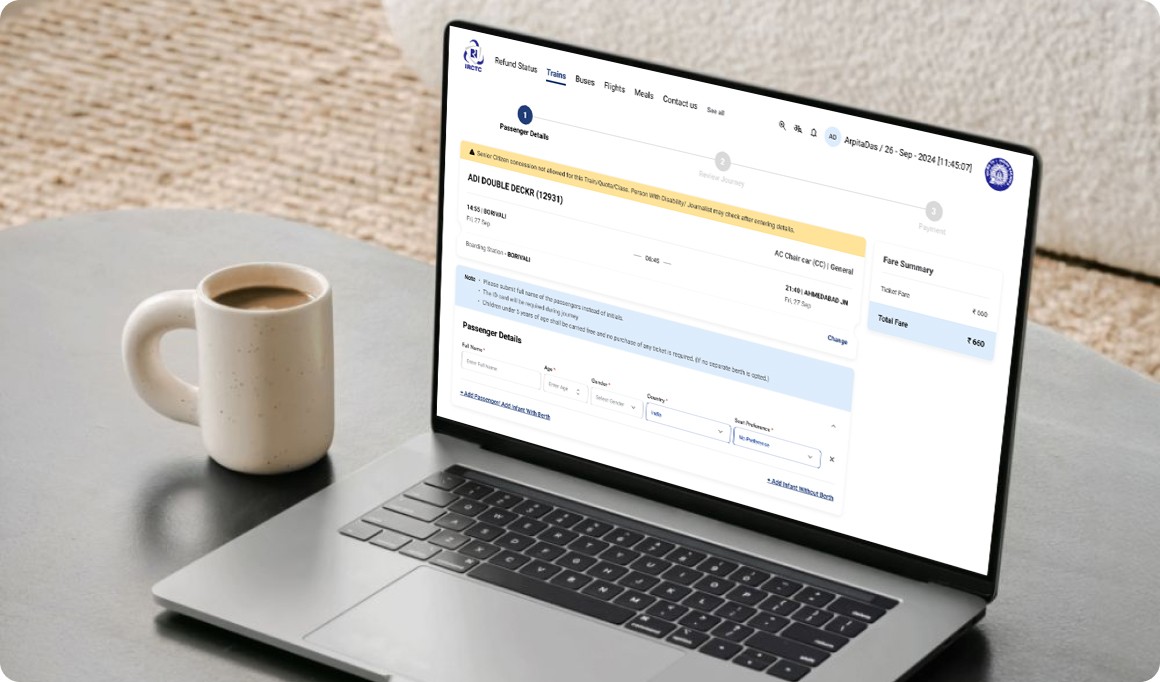
The “IRCTC Women’s Safety Redesign” project aims to enhance the train booking system by introducing a Gender-Based Seat Preference feature. This empowers female travelers with flexible seating options for various scenarios, whether traveling alone, with a child, or in mixed groups. By allowing women to select their seating arrangements, the redesign prioritizes their comfort and safety, fostering a secure and supportive travel environment.
Role
UI/UX Designer
Duration
1 Week
Team
Personal Project
Category
Website Design
Problem Statement
Female safety during solo train travel in India is a significant concern, as many women feel uncomfortable or unsafe when seated next to unknown male passengers, particularly on long or overnight journeys. This often leads to anxiety and discourages women from traveling by train due to fears of inappropriate behavior or harassment.
Problem Solution
This redesign introduces a Gender-Based Seat Preference feature that empowers women to select their seating arrangements according to their specific travel scenarios—whether traveling alone, with a child, or in a mixed group. This solution significantly enhances their travel experience by fostering a secure and comfortable environment.
Empathize
As a 24-year-old woman soon traveling alone from Ahmedabad to Mumbai, even during the day, I still feel uncomfortable about who might sit next to me. This discomfort made me realize how a few simple changes to the current IRCTC system could make a big difference. By introducing gender-based seating preferences, we can improve safety and comfort for solo female travelers. This project focuses on designing a feature that allows women to choose their seat companions, ensuring a safer and more comfortable journey.
Design Process
Empathize
Define
Prototype
Test
Design Solutions
Scenario 1
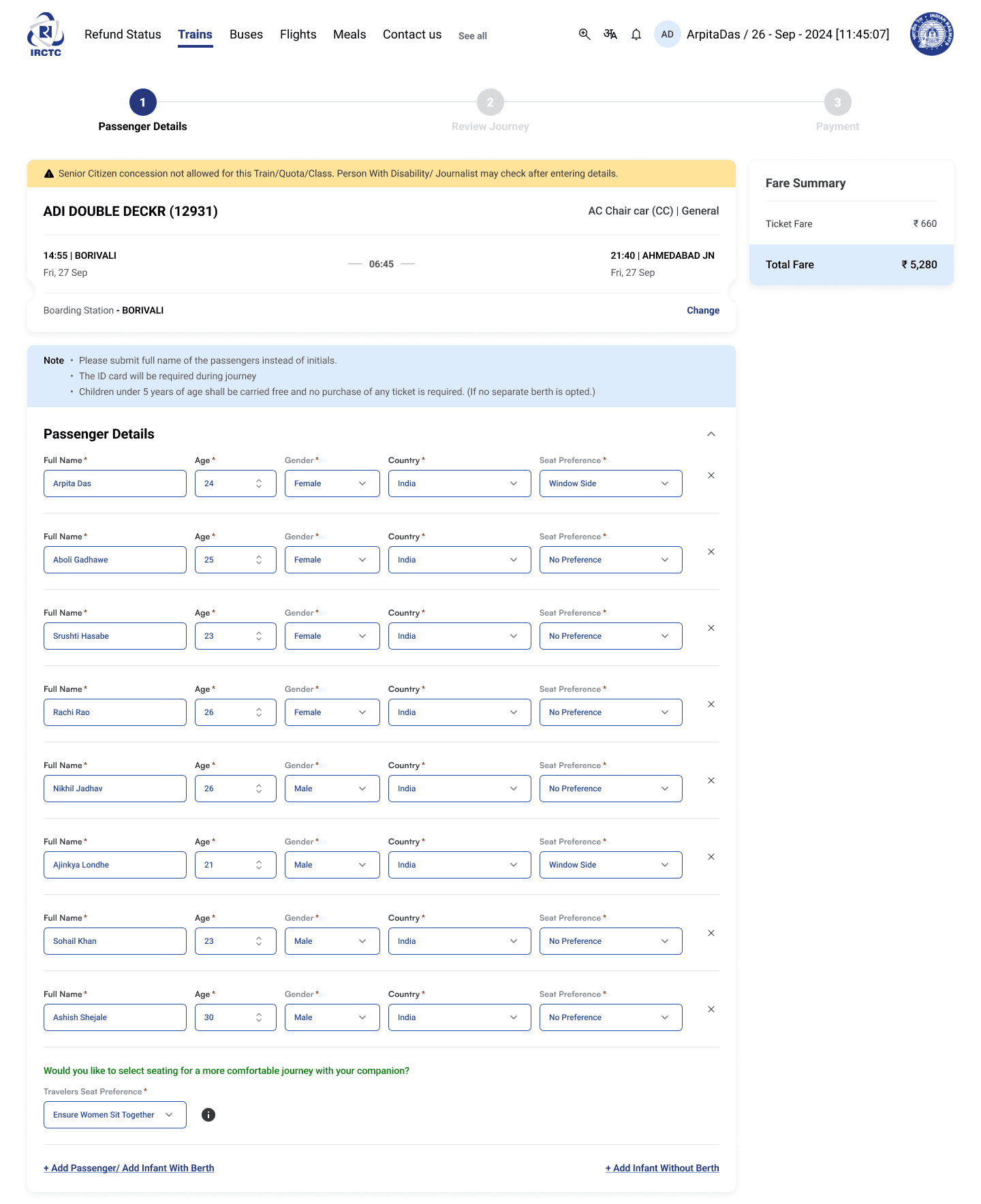
This feature empowers female travelers by providing seating options that enhance comfort and safety, whether they're traveling alone, with a child, or in a group. By introducing flexible choices tailored to different travel scenarios, this redesign ensures that women can feel at ease and in control of their seating preferences during their journey.
Dropdown Options :-
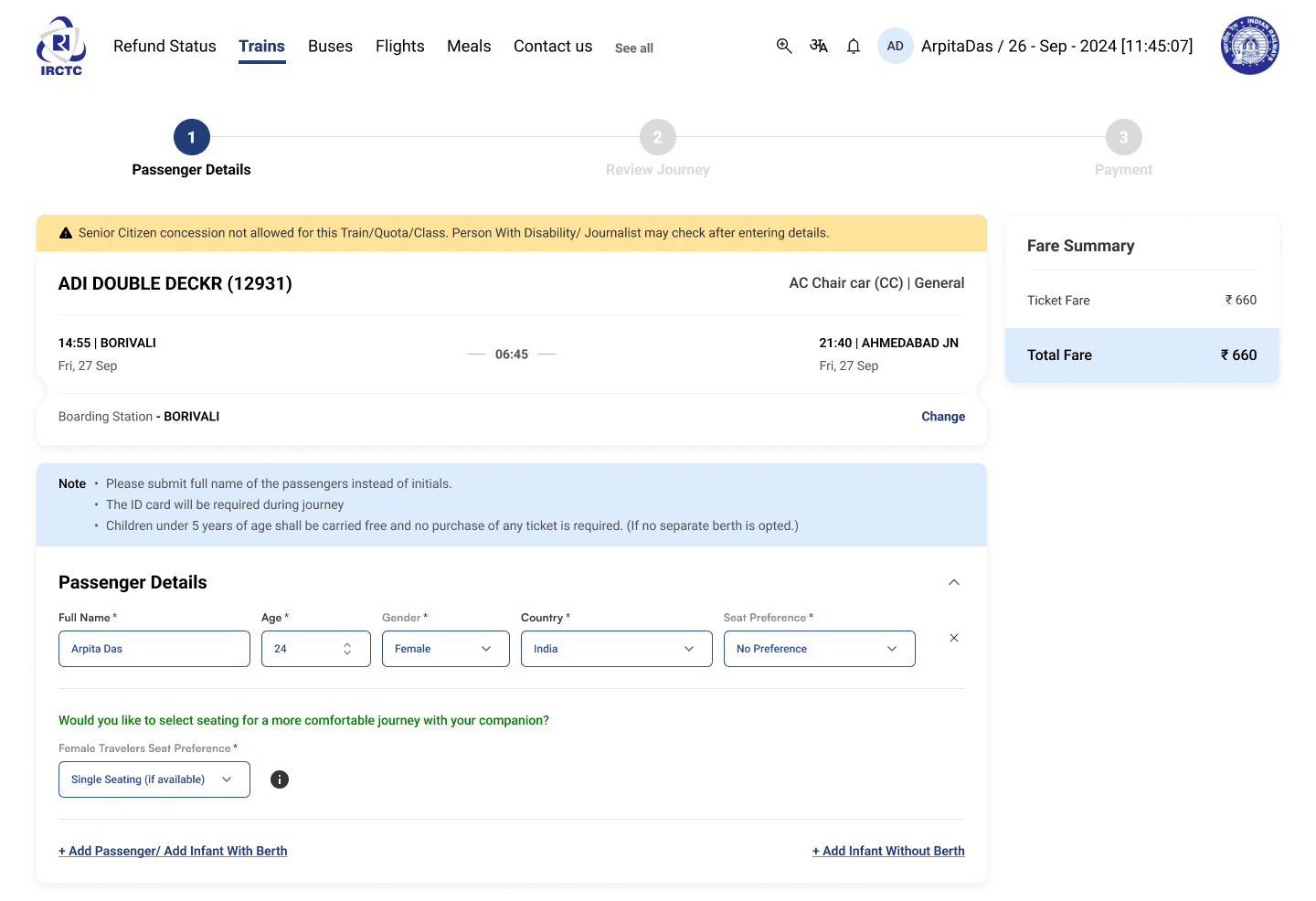
Female - Only Seating
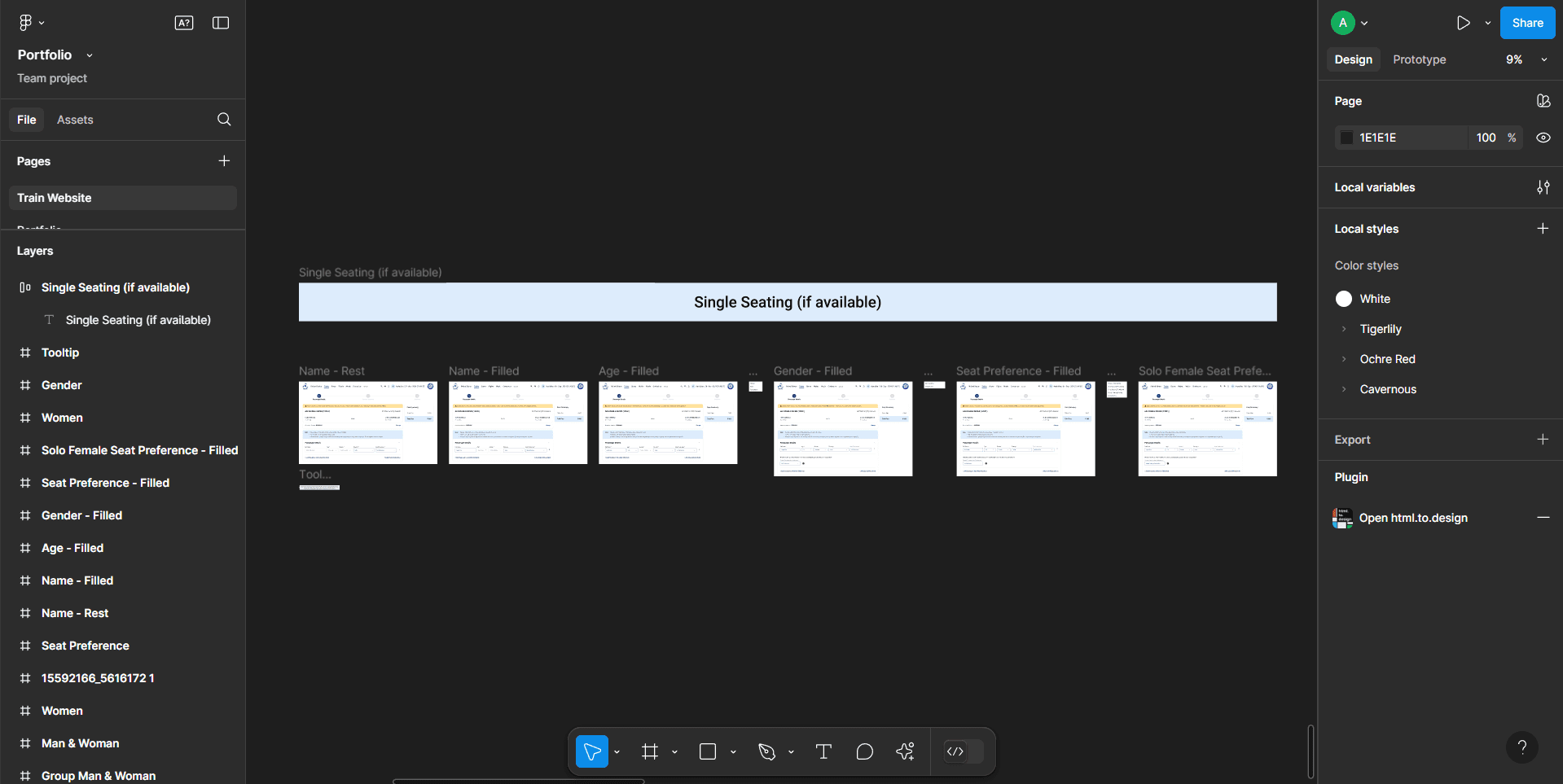
Single Seating (if available)
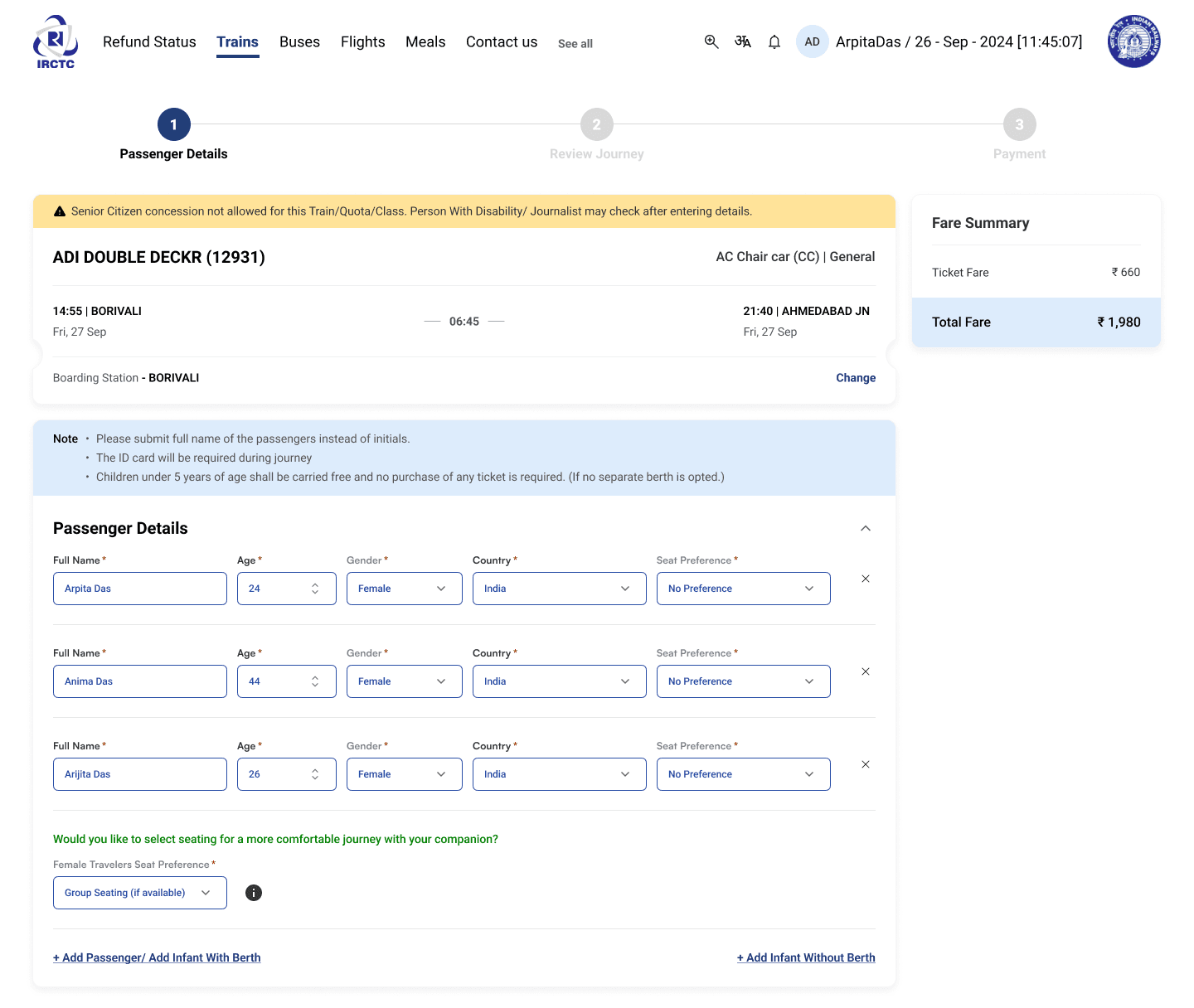
Group Seating (if available)
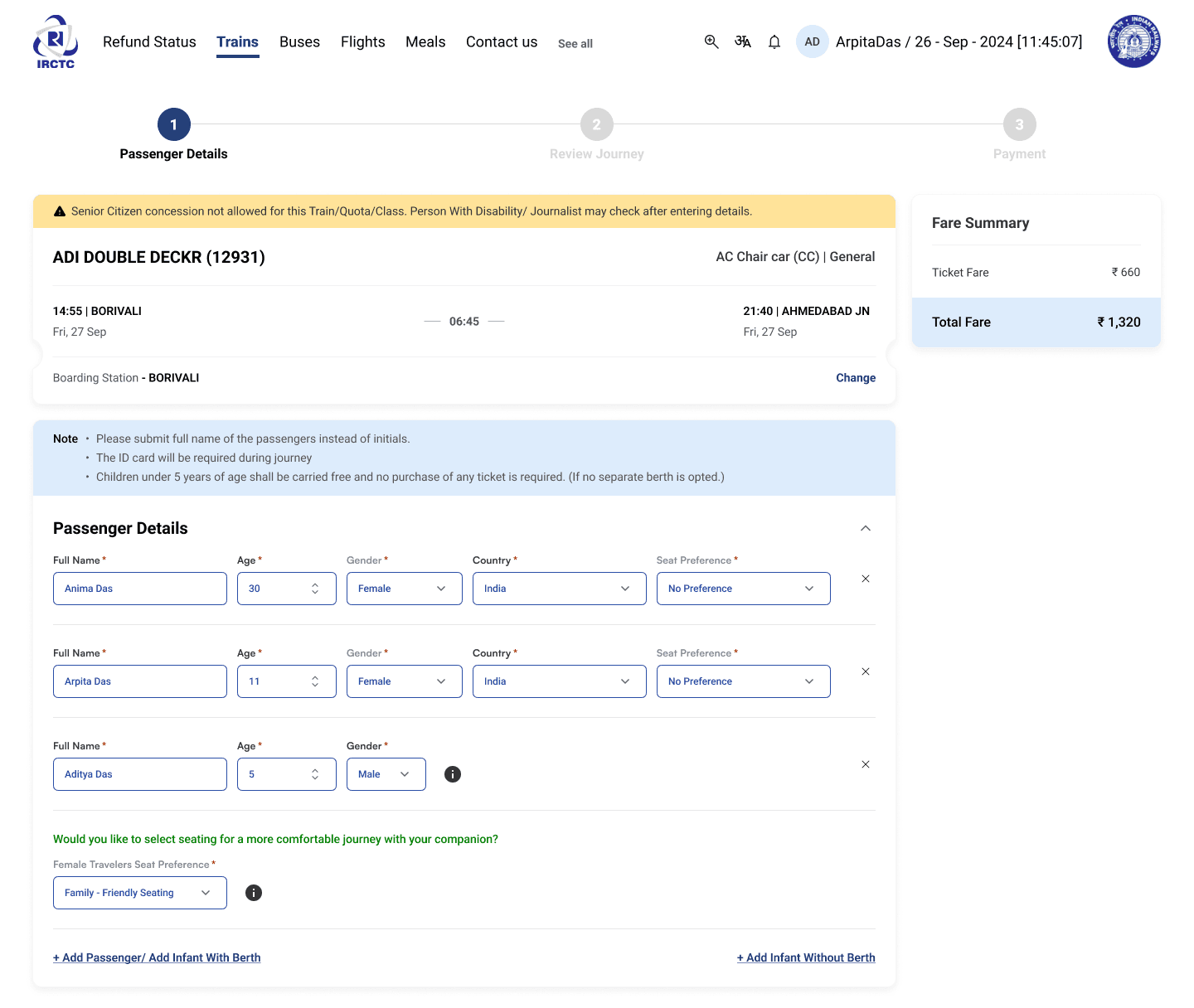
Family - Friendly Seating
No Preference
Choose a seat next to other female passengers.
Select an individual seat for more privacy.
Sit together with your female travel companions.
Sit near families for a more comfortable setting.
No specific seating preference.
Single Seating
Family-Friendly Seating
Group Seating
Scenario 2
This feature enhances the travel experience for women by prioritizing their comfort and safety in mixed groups. It allows female travelers to sit together while accommodating nearby male companions if needed, fostering a secure and supportive environment throughout their journey.
Dropdown Options :-
Group Seating (if available)
Ensure Women Sit Together
No Preference
Allows both women and men traveling together to sit together, ensuring a comfortable arrangement for the entire group.
Keeps female travelers close while accommodating male companions nearby if needed.
No specific seating preference.
Group Seating
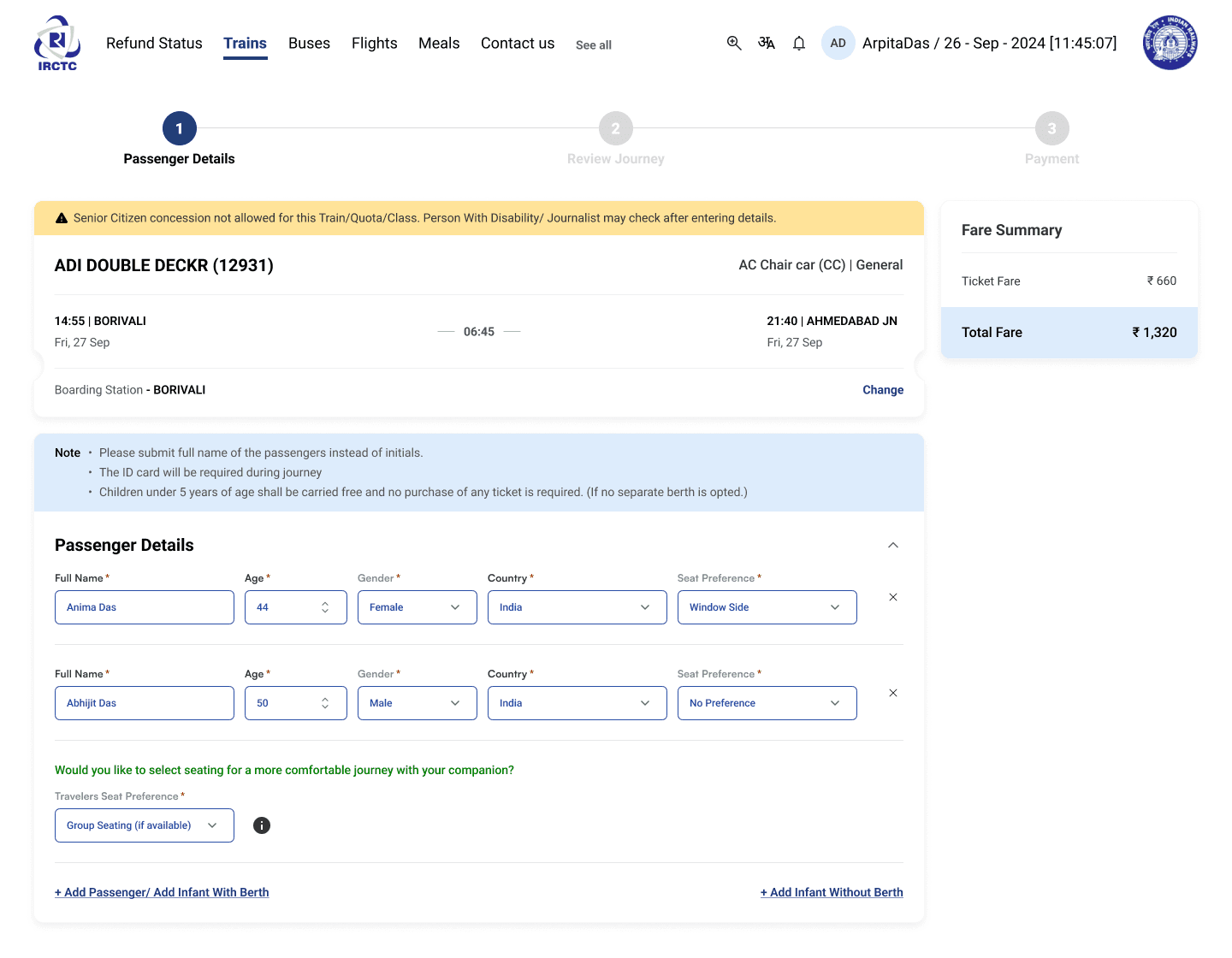
Ensure Women Sit Together
User Research
Understanding the problem
Solo female travelers in India often feel unsafe when seated next to male passengers on trains, especially during long journeys. The current IRCTC booking system lacks gender-based seat preferences, leaving women with limited control over their seating arrangements. While ladies' quotas exist, they are restricted and don’t address the wider safety concerns. This issue discourages many women from choosing trains, highlighting the need for a safer, more flexible seating solution.
Gaps
The **ladies' quota** is specifically designated for women traveling alone or with children under 12 years of age, primarily available in Sleeper Class and Second Seating (2S) on most Indian Railways trains. To book a ticket under this quota, travelers must select "Ladies" from the quota option on the IRCTC platform, as it does not support RAC or WL; once the six earmarked seats are sold out, the status will show "Not Available." In Sleeper Class on mail and express trains, a total of **six berths** are reserved for women, regardless of age, without any additional charges. One significant advantage of this quota is that it is not widely known, making it easier for women to secure tickets.
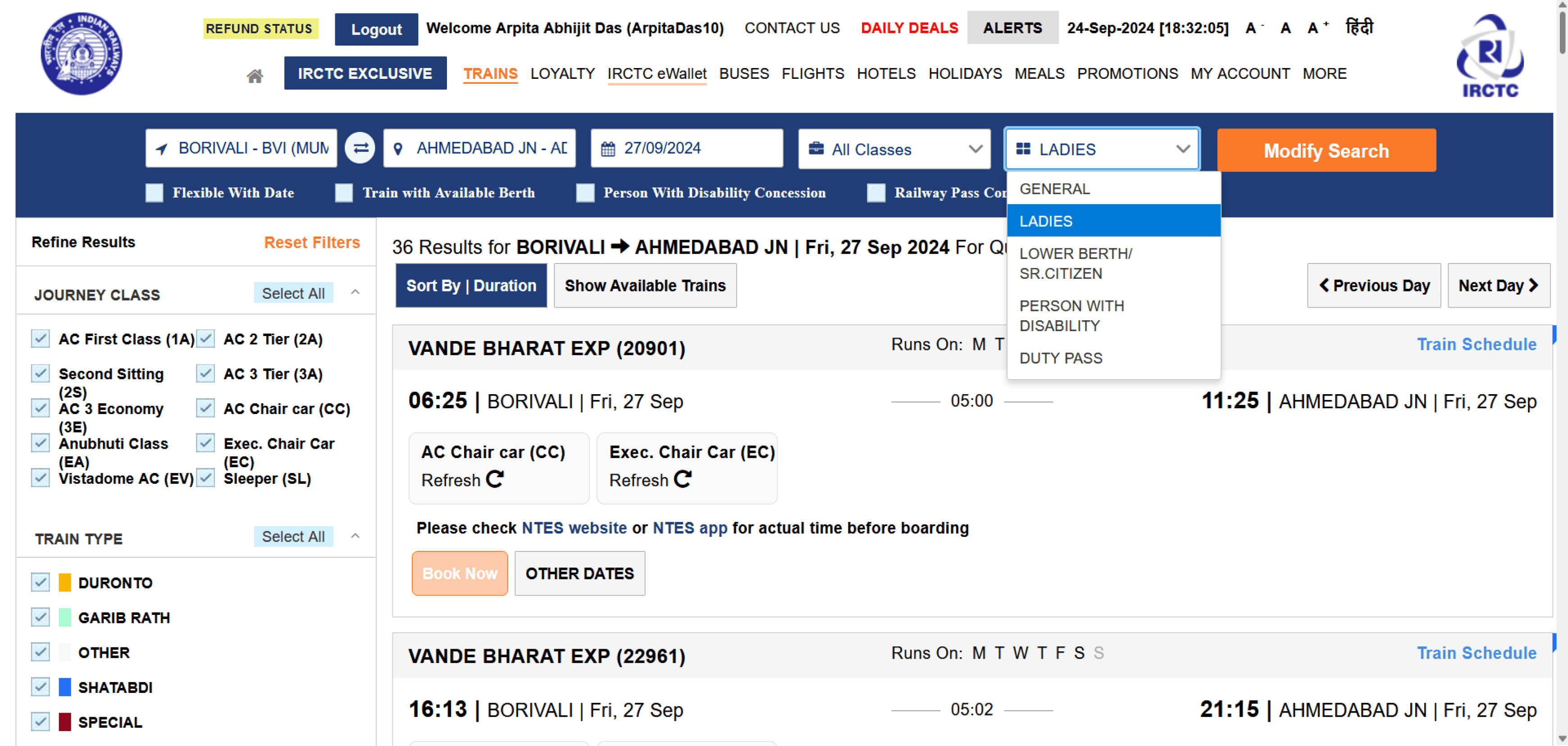
POV : “ As a female traveler, I feel that safety shouldn't be confined to just six reserved seats; it should be a fundamental right for all women. “
Competitive Analysis
Existing Features
After researching various ticket booking platforms like Paytm, MakeMyTrip, and RailYatri, it became clear that all these services connect to the IRCTC system for train bookings. Although these platforms provide additional features such as ease of payment and user-friendly interfaces, none of them offer gender-based seat preferences for solo female travelers. This limitation exists because they all operate under the same umbrella—the IRCTC system, which lacks the necessary flexibility and features for enhancing women’s safety during train journeys.
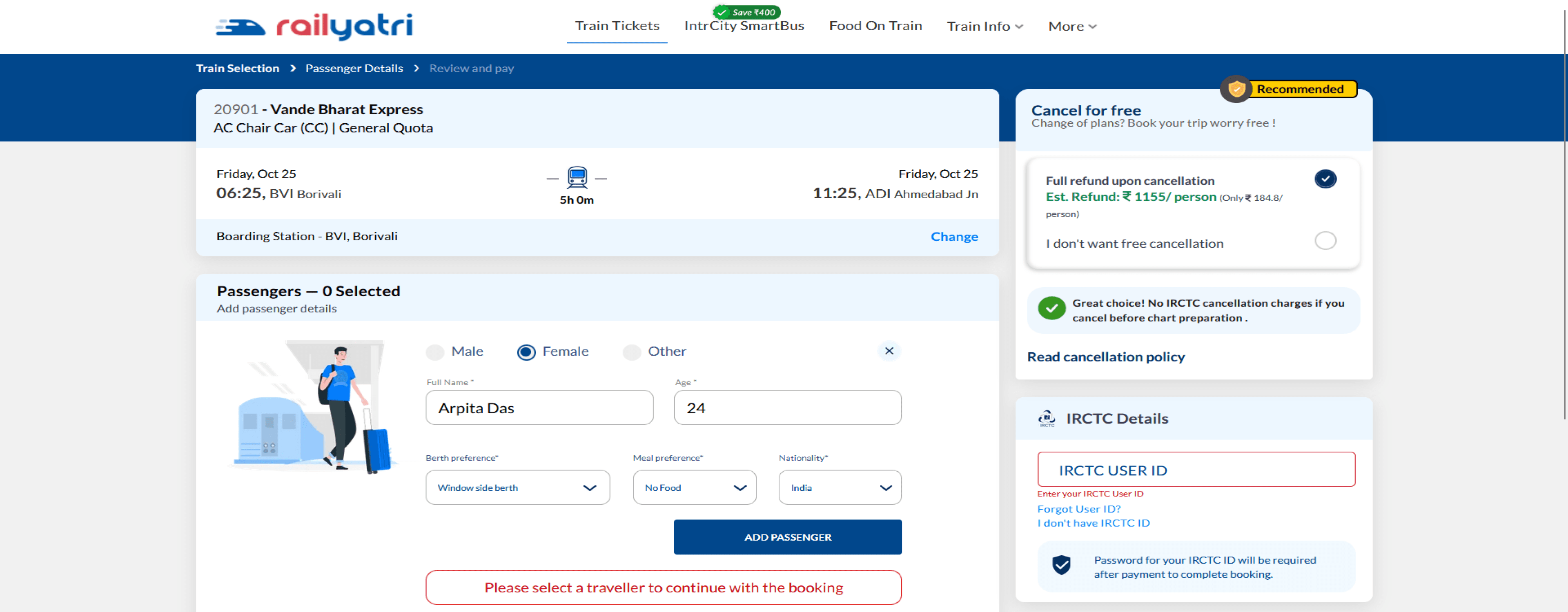
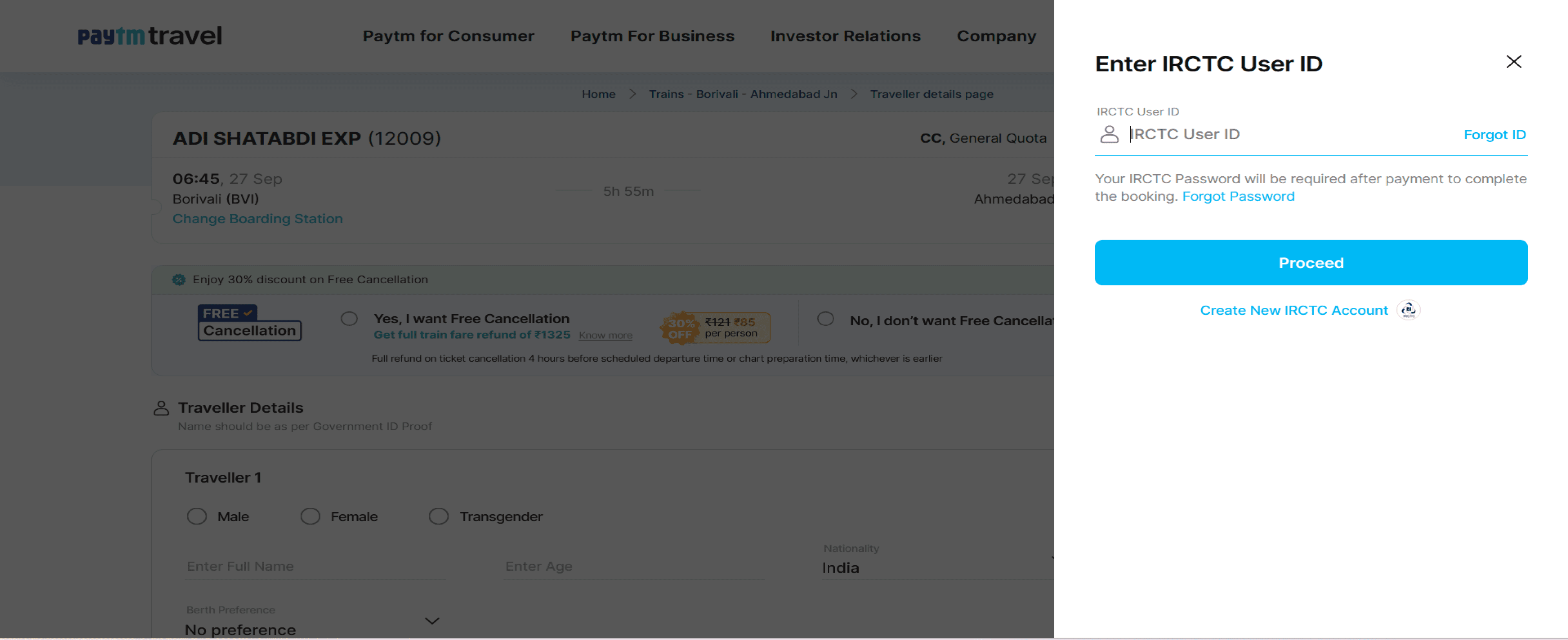
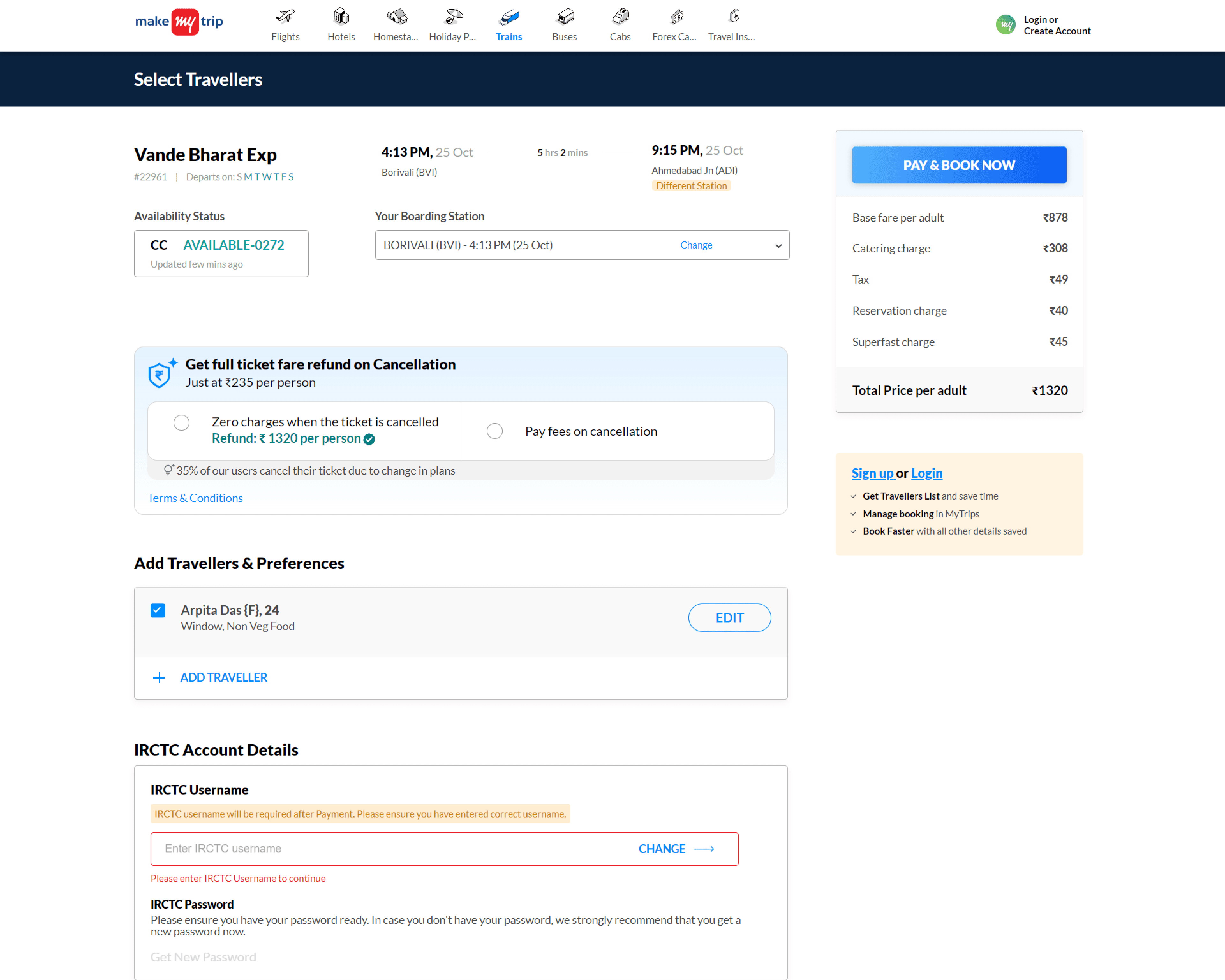
Updating the IRCTC system is vital due to its lack of gender-based seat preferences for solo female travelers, a feature missing on third-party platforms like Paytm and MakeMyTrip. This systemic issue limits safety and comfort for women across all booking services.
Let’s Dive deep into it? Shall We?
Based On the Data from Google Search.
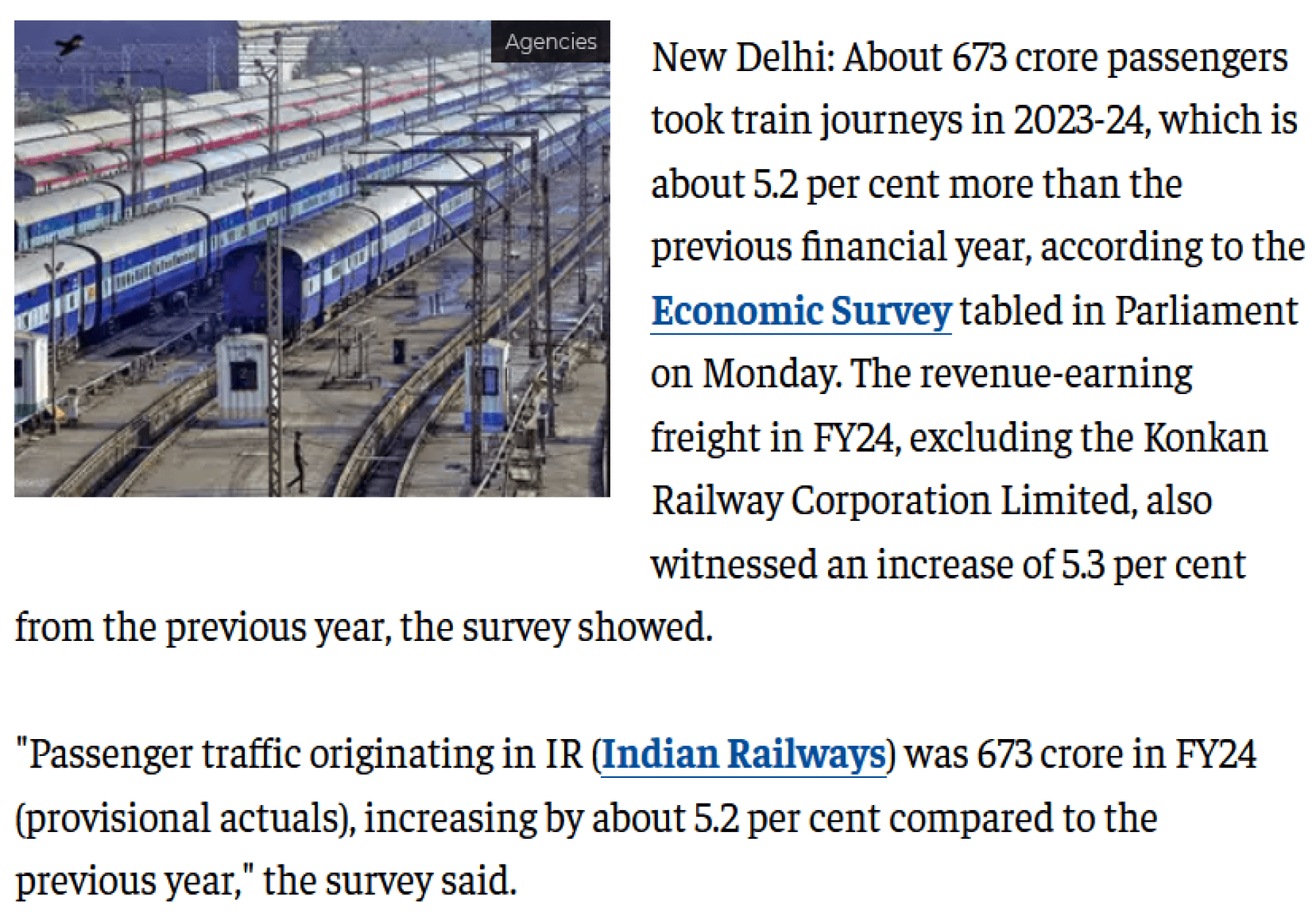
About 6.73 billion passengers took train journeys in 2023-24, reflecting a 5.2% increase from the previous financial year, according to the Economic Survey presented in Parliament.
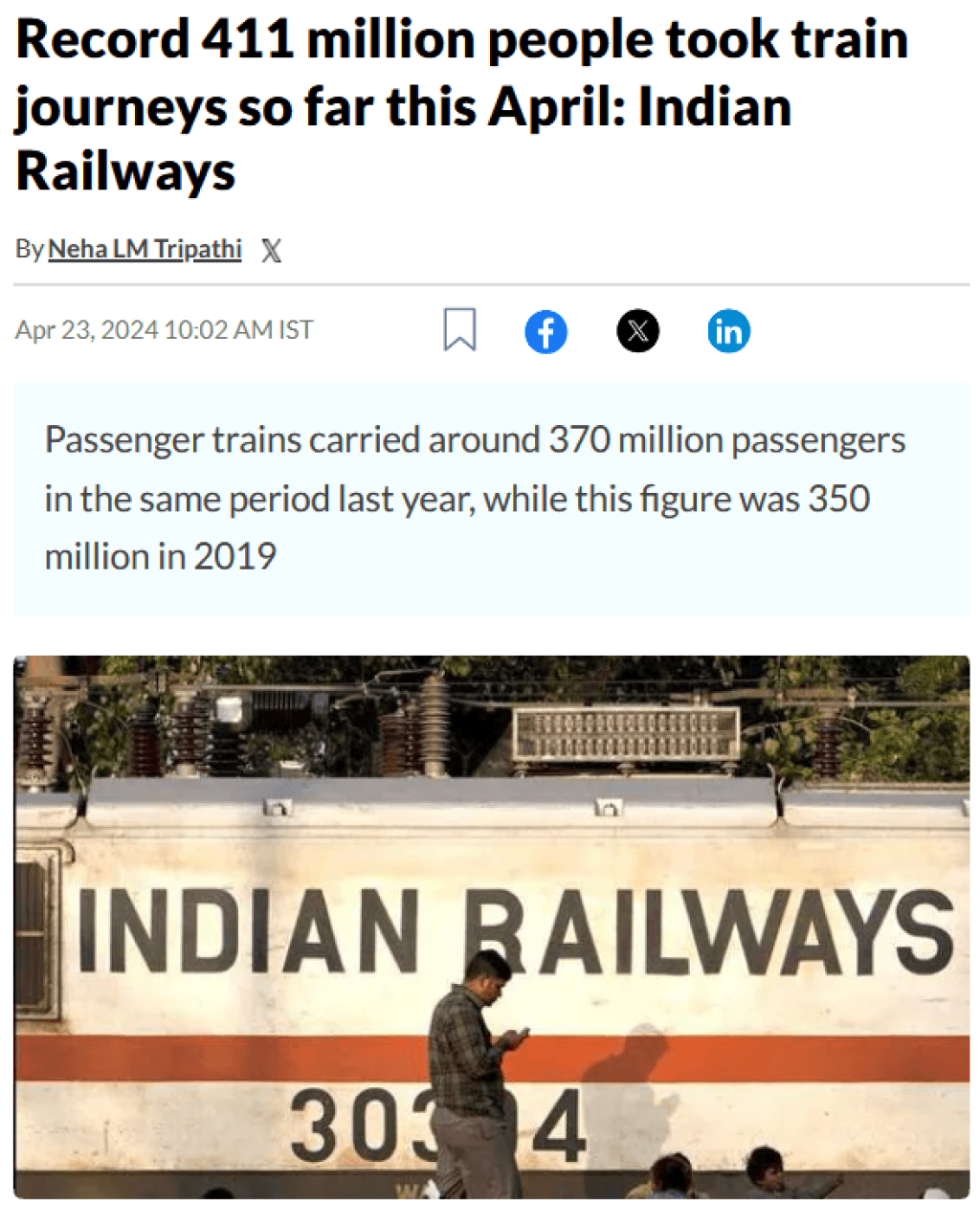
In just the first three weeks of April, at least 411 million passengers traveled by train across India.
And how many are womens?
Based On the Data from Google Search. I found that there are women who travels via train From the tickets we can see that around 250 million women passengers travelled solo or in groups along with other women, in FY2022-23, till January, but needs to take specific precautions because they feel uncomfortable and unsafe-
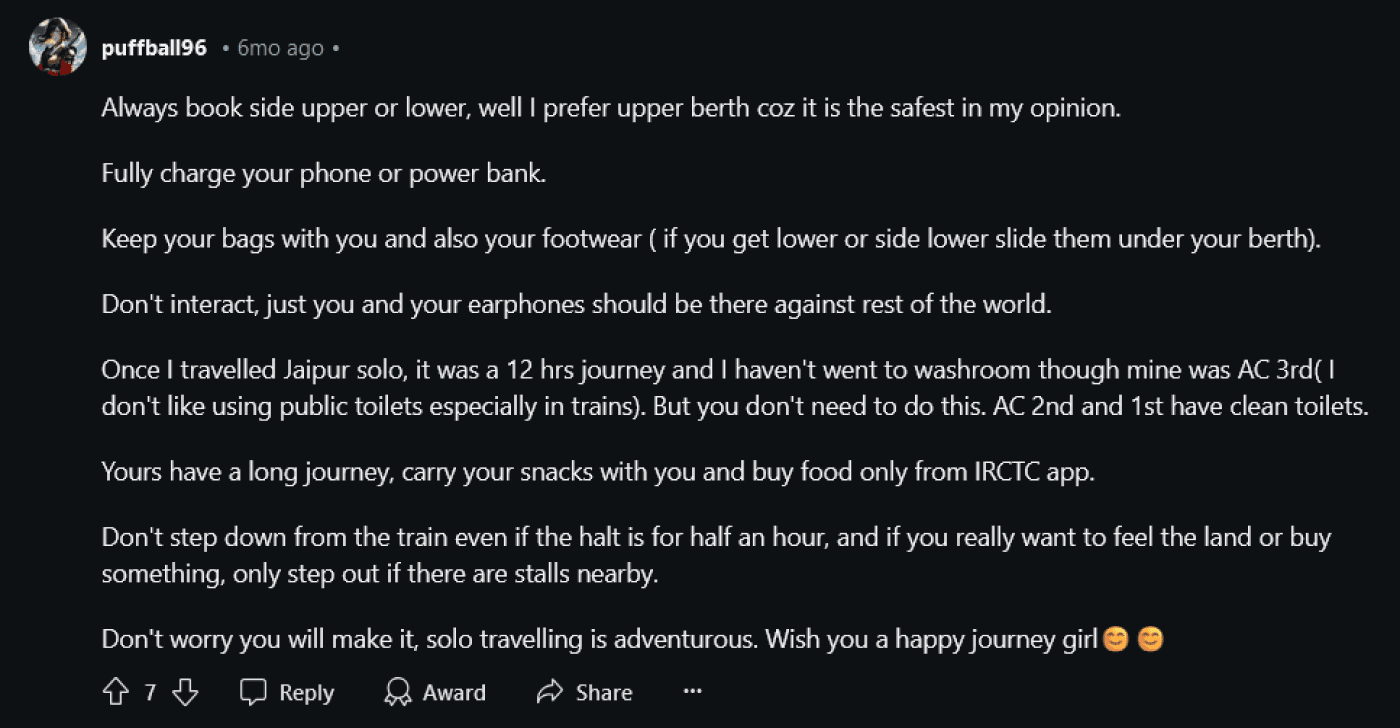
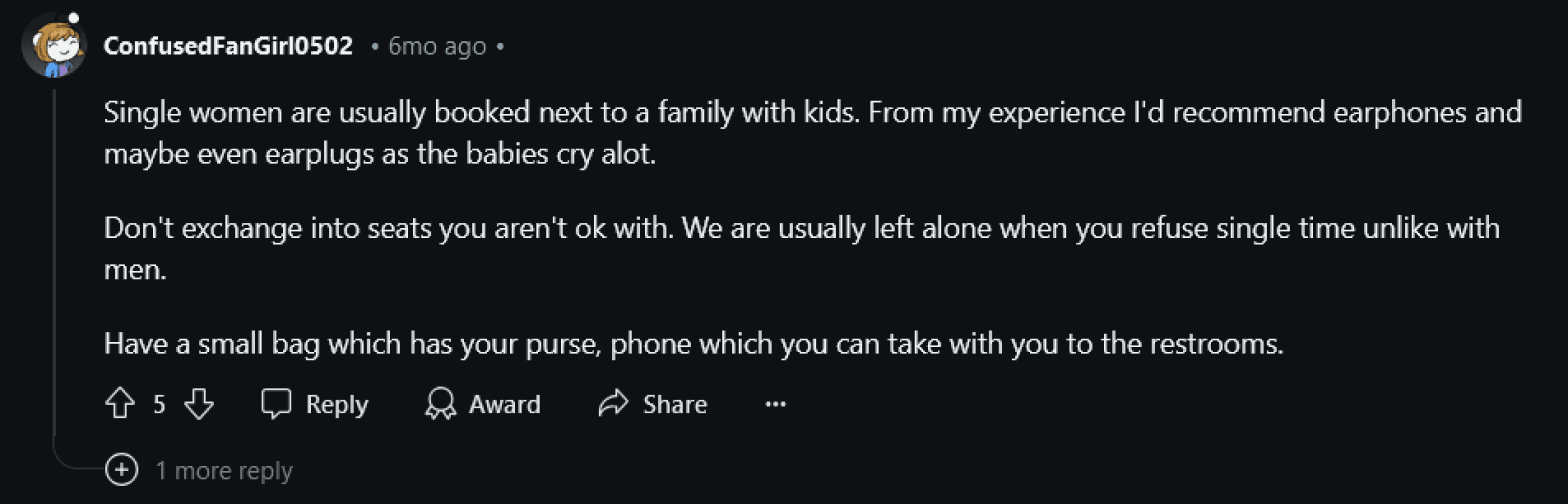
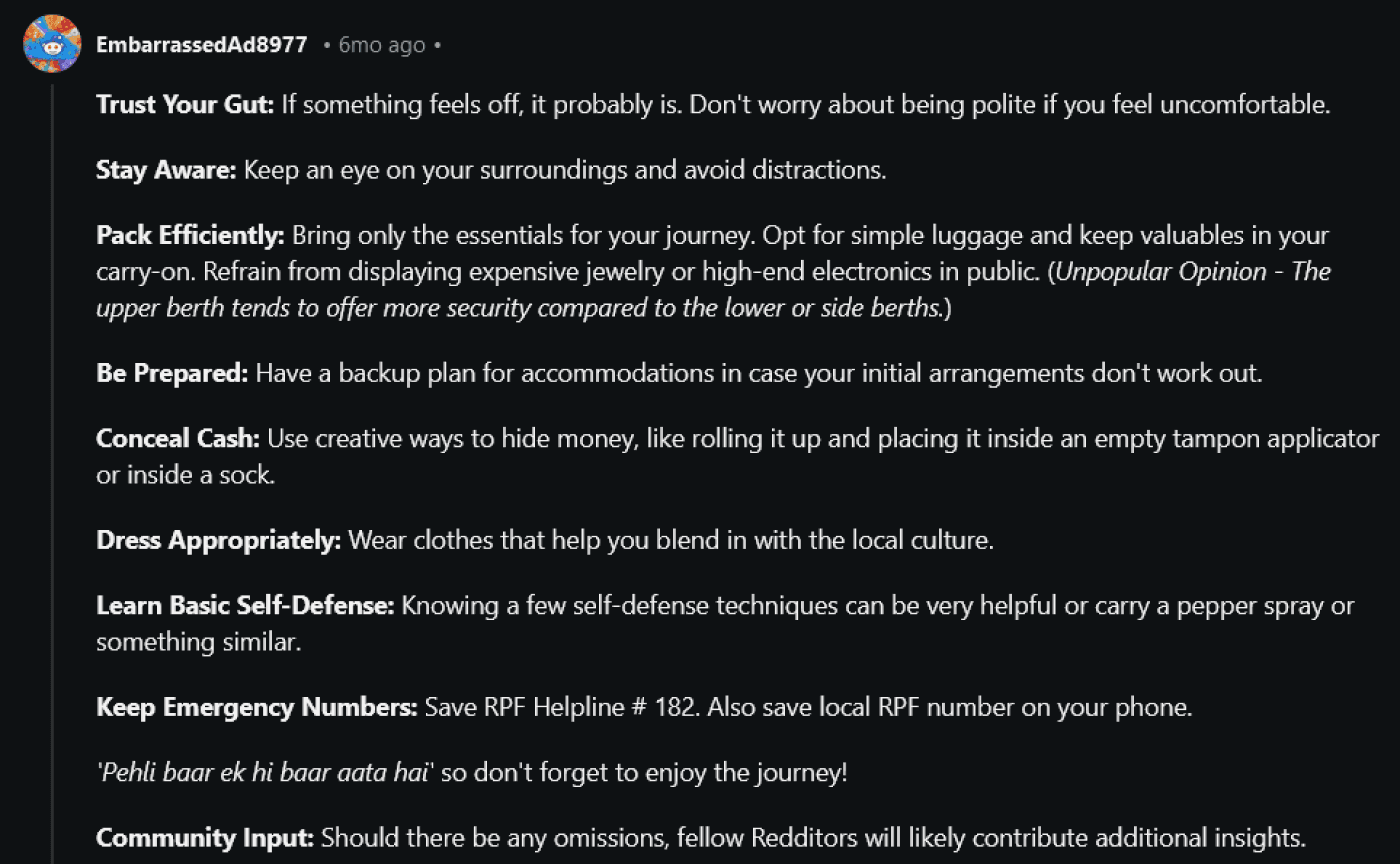
Understanding the users
After secondary research, I further wanted to get a deeper understanding of the problems faced by the people (user needs and behaviours). I conducted an informal interview with some of the people who travels often.
Questions
1. Have you ever felt uncomfortable or unsafe during a train journey?
2. If given the choice, who would you prefer to sit next to on a train journey?
3. How important is it to have a female-only seating option when traveling alone?
4. If traveling with another woman, what is your seating preference?
5. What are your main safety concerns when traveling by train?
6. Which features would make you feel safer during your journey?
7. Would you be willing to pay extra for a seat in a female-only compartment?
8. Which class do you usually travel in?
9. Have you ever experienced an issue where your seating preference was not met?
Target Audience
The target audience for this survey is female travelers, including women traveling alone, in groups, or with children on trains, focusing on their safety and comfort preferences. The survey is aimed at women aged 18-50.
Define
User Personas
Based on the research it was evident that users want a product that is easy to use and has an engaging impact on their trips.

Ananya Sharma, 25
UI/UX Designer
Mumbai
Biography
Ananya lives in Mumbai and travels to Nagpur to visit parents every three months. She prefers train travel for its affordability and convenience and is tech-savvy, often booking through mobile apps.
Needs & Goals
Ensure personal safety while traveling alone.
Find a comfortable and suitable seat arrangement.
Frustrations
Uncertainty about seating arrangements.
Lack of gender-based seating options on booking.

Rinku Chaudhary, 27
Cloud Engineer
Mumbai
Biography
Rinku resides in Mumbai, and recently, she traveled to Delhi for her friend’s wedding with her one-year-old child, as she felt unsafe. This experience highlighted her need for family-friendly travel options.
Needs & Goals
Ensure safety and comfort for herself and her child.
Find suitable seating for her child.
Frustrations
Uncertainty about seating and nearby passengers.
Lack of gender-based seating options.
Prototype
Test
User Feedback
I collected feedback from a group of friends who explored the app I designed, and here are some of their thoughts.
Ananya Sharma, 28
UI/UX Designer
Mumbai
Feedback
Gender-based seat preferences help me feel safer, with options to sit near other women or in family-friendly areas.
Options like 'Single Seat' or 'Seats Together' let me quickly find the right fit, solo or with company.
Ananya Sharma, 28
UI/UX Designer
Mumbai
Feedback
Family-friendly seating makes me feel secure, with options to sit near other families—ideal for traveling with my child.
Gender-based seating options give me peace of mind about who we’ll be seated near, making our journey much more comfortable.
Learnings & Takeaways
Balancing Speed & Quality
Managed a fast-paced timeline while maintaining design precision.
Navigating Uncertainty
Learned to move forward without clear answers, exploring multiple solutions.
Feedback & Iteration
Actively gathered feedback to refine components, with future plans to extend the system to flights and buses.
Single Seating Option: If available, a single seat will be assigned for privacy. If not, then system will allocate seating next to another female passenger.
Female-Only Seating: If female-only seating is available, the traveler will be placed next to a female passenger. If not, then a single seat will be assigned if available
Family-Friendly Seating : Places travelers near families, creating a relaxed, familiar environment that emphasizes comfort and safety—ideal for those who prefer to travel in a family-oriented setting.
Group Seating : Allows women traveling together to sit close to each other, providing a sense of safety and companionship during the journey.
Group Seating : Women and men traveling together will be seated in a way that allows them to sit together. This option ensures that both female and male travelers can share seats, promoting a sense of unity and comfort within the group while accommodating the preferences of all passengers.
Ensure Women Sit Together : When traveling in a mixed-gender group, female passengers will be seated next to each other to foster a sense of safety and camaraderie. Male companions will be seated nearby but not directly adjacent to the women, allowing for a comfortable travel environment while maintaining the comfort of female travelers.
Let’s Connect
Send an email - arpitadas.ad20@gmail.com